

by Tom Chillemi
History defines this area and volunteers labor to keep history engaging.
Among them are the Northern Neck Farm Museum, the Kilmarnock Museum, the Morattico Waterfront Museum; and the Colonial Seaport Foundation’s Luna, a floating museum based in Deltaville.
All of them are staffed solely by volunteers who are eager to share their stories.
Machines of the past
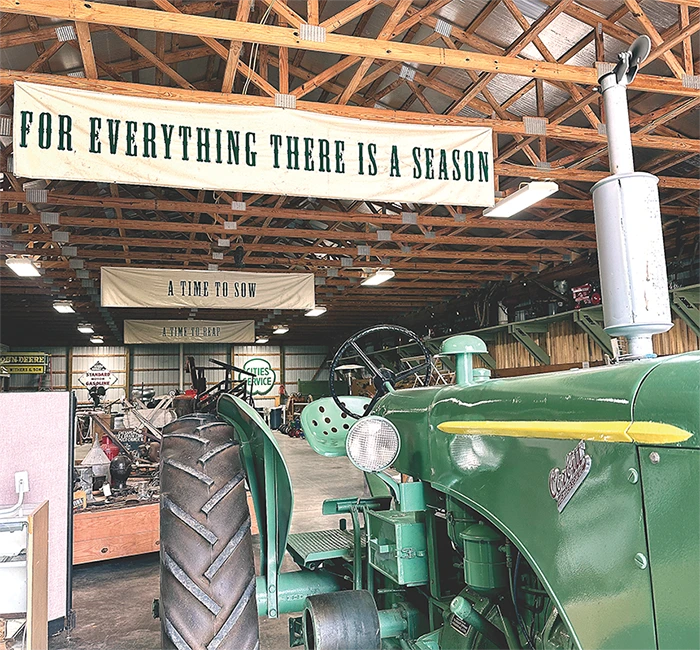
Just a few generations ago, folks made a living from the soil. Farming was labor intensive. As the era of muscle power and beasts of burden wound down, machines increased production.
The Northern Neck Farm Museum, 12705 Northumberland Highway, Heathsville, houses a collection of early farming implements from the last century that give visitors an idea of how farming has evolved, said museum president Barbara Jones.
On the second Saturday in July the farm demonstrates how wheat was threshed —a process that separates wheat from the stalk—before the large “combine” cuts and threshes.
On the third Saturday of October, the museum will conduct Harvest Fest with wagon rides, food, a corn maze and much more, she said.
The museum is open from 10 a.m.-2 p.m. Saturdays and 1-4 p.m. Sundays, May through October. Admission is $2 for adults, children 12 and younger are admitted free. The phone number is 761-5952.
Artifacts and tales
The Kilmarnock Museum, 96 North Main Street, Kilmarnock, houses artifacts and some entertaining tales as well.
“We like to amaze and amuse you at the Kilmarnock Museum,” said president Carroll Lee Ashburn. “People leave surprised.”
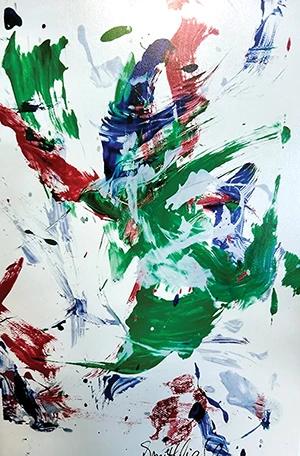
To start off, Ashburn tells of a famous potbelly pig painting abstract art in Kilmarnock. “He would pick up a brush, dip in the paint and go over to the canvas.”
He was made immortal in the book Cured Ham, Smithfield the Painting Pig by his keeper Fran Martin.
Another story that sort of went viral in the late 1990s is about the band director who was arrested and the band pulled out of a Warsaw parade because his band was marching too slowly.
According to Ashburn, the Lancaster High School Marching Red Devils Band was behind an antique vehicle whose smelly exhaust bothered the flag bearers leading the band. The band dropped back to get away from the fumes, leaving a gap.
The Washington Post reported that the Richmond County sheriff at the time told director Robbie Spiers to, “Pick up the pace or you’re out of the parade.”
Ashburn said a photo shows Spiers handcuffed sitting on a curb. “It made the tabloids,” said Ashburn, “Jay Leno talked about it on ‘The Tonight Show’.”
A state trooper told the sheriff he needed to take Spiers to jail or release him. He was released. But there’s more to the story.
The Lancaster Red Devils Marching Band is one of the larger bands in the area, and the incident was turned into a big fundraiser when tee shirts were made stating, “We’re marching as fast as we can.”
The museum displays a photo of Burt Chase of Kilmarnock. “He is the only one we know of to fly under the Norris Bridge and not get caught,” said Ashburn.
The story goes that Lt. Chase was flying an F-9 Cougar jet out of Naval Air Station Oceana in Virginia Beach when he executed the daring maneuver. Chase became a rear admiral. He went to Thailand to help their navy, for which he was awarded the Order of the White Elephant.
Another photo is of a boat that was a bank. In 1965 Chesapeake Bank launched its floating financial services. “It was the nation’s only floating bank at the time,” said Ashburn, adding that it’s believed that if there was an attempted robbery policy called for the captain was to throw the money overboard.
The Kilmarnock Museum has produced four videos and the newest, “Pirates of the Bay,” will premier for the public October 5 and 14 at Compass Cinema Six.
The Kilmarnock Museum is open from 11 a.m.-4 p.m. Wednesdays through Saturdays and by appointment, 296-0930.
Country store
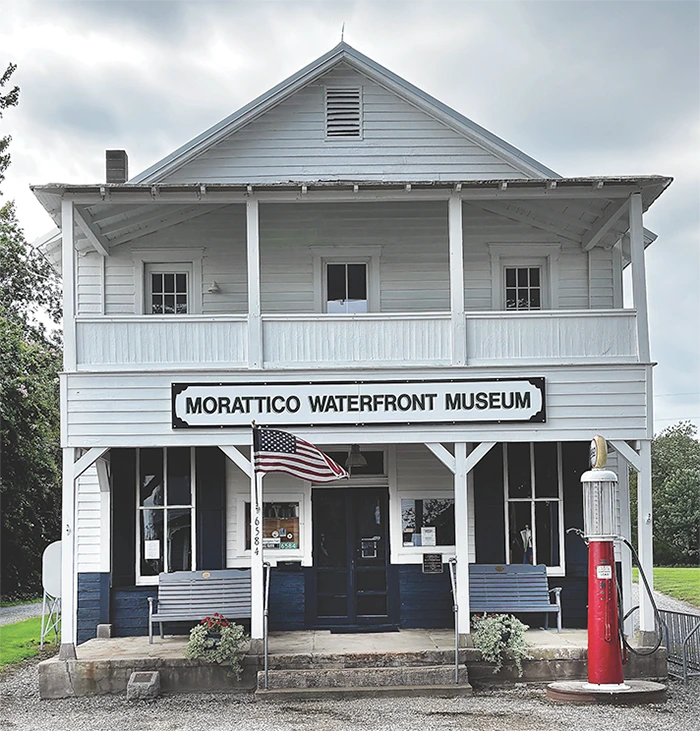
Not so very long ago most household “needs” could be found at a country store like the one that has become the Morattico Waterfront Museum, 6584 Morattico Road, Morattico.
Artifacts of bygone eras are now housed in the former Morattico General Store, built in 1901.
When the store closed in 2003, neighbor Patrica McGee had a vision for the store to become a museum. A community meeting was conducted on a snowy Saturday. “About 80 people came, that’s how it took off,” said Connie Conley, whose grandparents Weston and Fannie Conley purchased the store in 1935 and operated it until 1953.
Connie Conley and her parents, Weston Conley Jr. and Dorothy, donated the building for the museum that overlooks the Rappahannock River, from which ancestors of Morattico made their living as watermen.
“A little fishing village with a big heart,” Morattico is named after the Moraughtacund Indians who encountered Capt. John Smith as he explored the Chesapeake Bay in 1608.
The museum is listed on the National Register of Historic Places and the Virginia Landmarks Register.
The Morattico Waterfront Museum is open from noon-4 p.m. Saturdays and 1-4 p.m. Sundays, may through October; and by appointment, 761-6213, mwmv03@gmail.com.
Maritime history
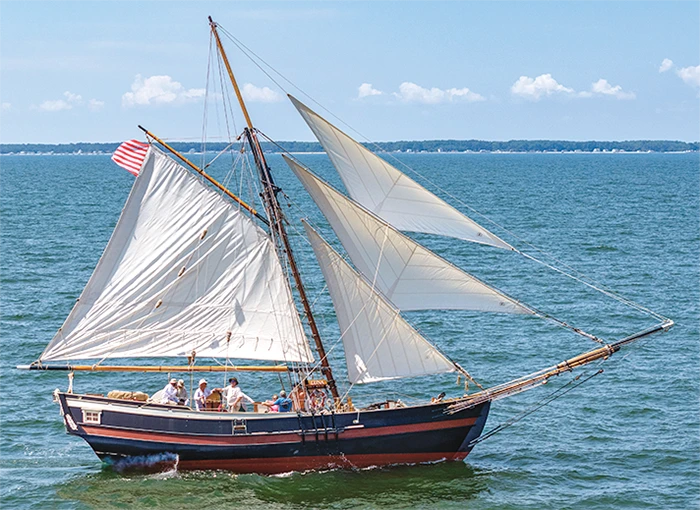
Luna, “The little tall ship,” is the centerpiece of the Colonial Seaport Foundation (CSF) formed in 2007 to rebuild a replica of an 18th-century coastal trading ship.
Luna was built in 1972 in Nova Scotia and had fallen into disrepair when CSF found her in Florida. The revival was completed in 2022 when this authentic ship took to the waters of Deltaville, where CSF is based.
Since then Luna has brought maritime history to life, as a floating STEM classroom for area students, as well as in movies and documentaries. Recently, Luna was part of America 250 sailing events in Yorktown, Cape Charles and Norfolk.
In July Luna played a role in the reenactment of the Battle of Cricket Hill in Mathews, where Virginia’s last colonial governor tried to hide after being chased from Norfolk.
Luna will return to Yorktown October 17-19 for Victory Day, commemorating the British surrender. Luna also will take part in the Turkey Shoot Regatta October 3-4 on the Rappahannock River.
Luna’s season will be capped at the Urbanna Oyster Festival starting with students tours November 5 and continuing for the rest of the festival, November 6-7. The Luna will be docked at the Urbanna Town Marina.
Staffed by an all volunteer crew, Luna is an educational organization focused on preserving facets of America’s Colonial maritime heritage.
New crew members can expect to “learn the ropes” and seasoned sailors will learn new methods of sailing on board a sloop rigged, colonial era ship that celebrates the region and its maritime heritage.
When water was the preferred means of travel, ships like Luna moved goods around the Chesapeake Bay and its rivers. Those days are gone, but Luna lives to preserve history.
Contact jhcollamore@colonialseaport.org.
