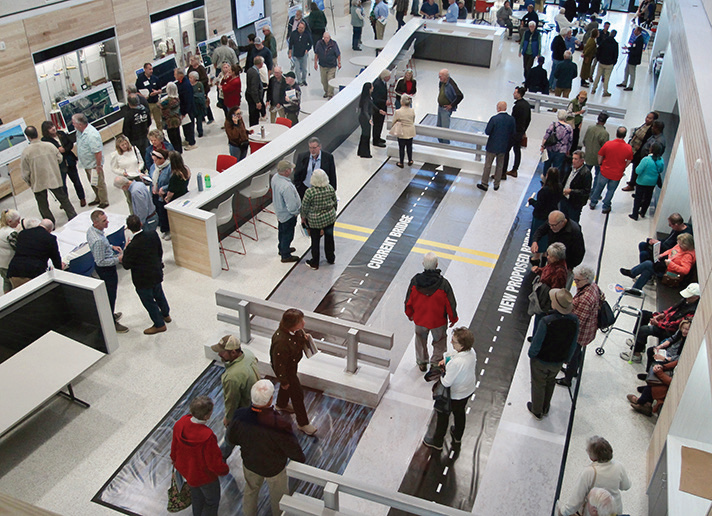
IRVINGTON—A curious community filled the lobby of Lancaster High School on Wednesday, October 21, to see the design for a new bridge that will become part of the Northern Neck landscape for decades.
By Jackie Nunnery
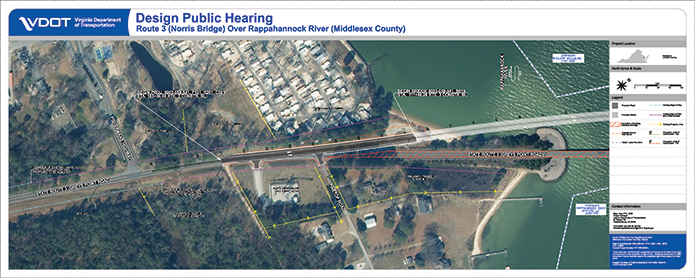
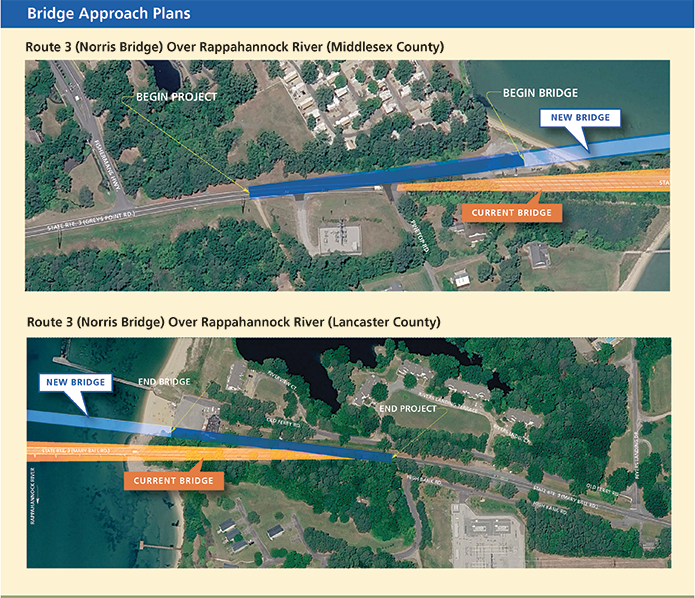
The Virginia Department of Transportation (VDOT) held a design public hearing seeking feedback on the proposed design for the Robert O. Norris Jr. Memorial Bridge replacement project currently scheduled to start construction in 2028.
When former Gov. Glenn Youngkin visited White Stone in August 2025 to sign the bill speeding up the start date by eight years, he challenged VDOT commissioner Stephen Brich to make the new bridge “iconic,” saying “we always look to iconic bridges, the Golden Gate Bridge, the Brooklyn Bridge, the Delaware Memorial Bridge. Commissioner, I’m just going to issue a challenge, a challenge that when Americans talk about iconic bridges, they will once again talk about that bridge that connects the Northern Neck.”
The project’s current budget of $724 million has been focused on building a bridge with improved safety and traffic operations according to VDOT mega project engineer Beau Hoyt. “It’s been described as a white knuckle bridge so the first priority was creating the space within the current design standards.”
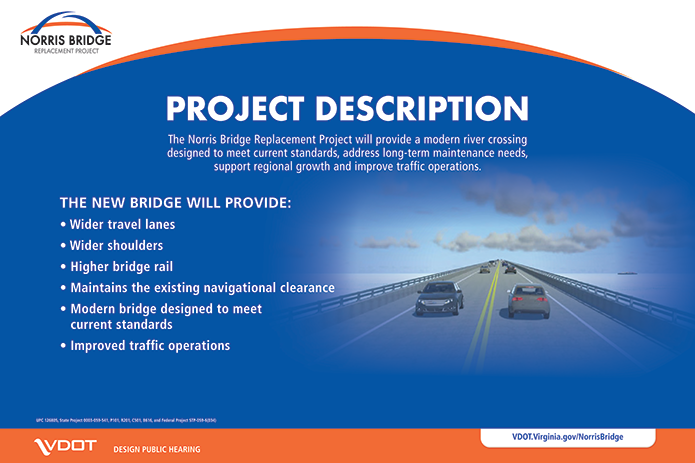
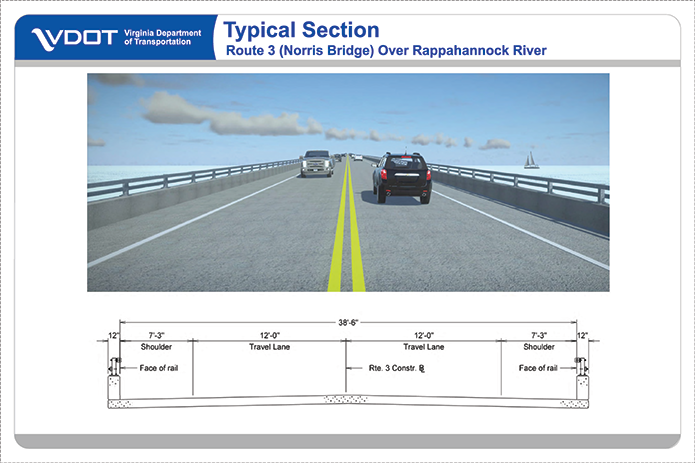
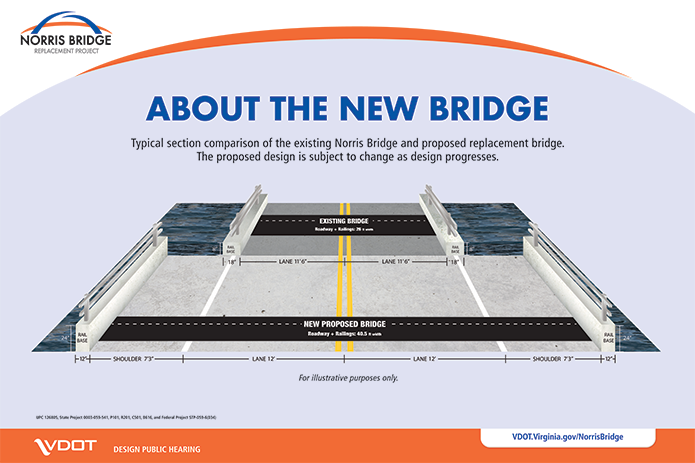
When completed, the new bridge will feature two 12-foot travel lanes—up from the current 11 feet 6 inches; 7-foot shoulders; and 42-inch high concrete rails—up from 32 inches. In addition to improving safety, the wider lanes and shoulders should provide greater access for first responders and reduce the number of bridge closures due to accidents, said Hoyt.
The replacement bridge’s simpler concrete and steel girder design also will minimize long-term maintenance, reducing costs and minimizing delays for drivers as a result, Hoyt said.
The steel truss design of the Norris Bridge must be inspected more often and takes longer to inspect. This drives up maintenance costs, requires longer lane closures and makes a greater impact on drivers.
While roughly 8,800 cars currently make the river crossing daily, VDOT has previously said the new bridge is being designed for the 11,500 vehicles expected by 2050. It is also being designed with existing navigational clearances of 110 feet vertical and 300 feet horizontal.
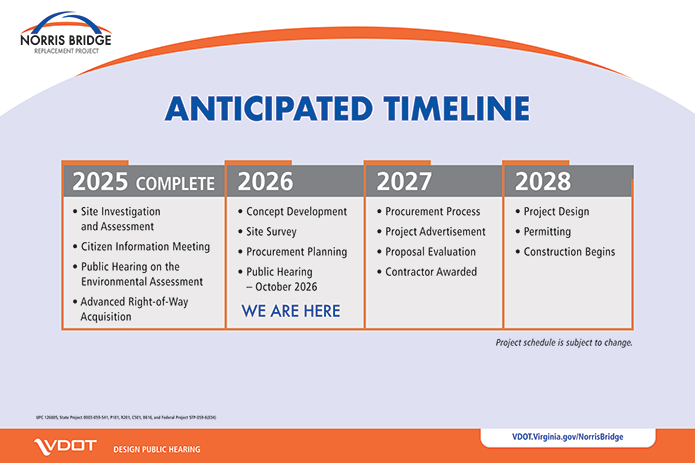
Hoyt said the cost of the project is still under review but is expected to increase due to rising costs of construction. However, it would not impact the project timeline since “meaningful construction” would not begin until 2029. The next step, the procurement process, will take place in 2027. VDOT will continue to take comments until November 2.
To complete an online survey, visit
https://www.vdot.virginia.gov/projects/major-projects/norris-bridge/.
Comments also may be mailed to Norris Bridge Replacement Project; Beau Hoyt, P.E.; Virginia Department of Transportation; 87 Deacon Road; Fredericksburg, 22405, or emailed to NorrisBridgeReplacement@VDOT.Virginia.gov.