DELRAY BEACH, FL—Across the years in which I have undertaken a variety of public service roles, I have been concerned, indeed alarmed, about the advancing environmental decline of natural resources, particularly in our area with respect to wetlands, both tidal and non-tidal, each of which is critical to a sound ecology.
The advance of modern technology has brought us Tullich Ditching, a process whereby wetlands are “drained” by digging deep ditches that carry off the standing water of a non-tidal wetland, leaving the property capable of being developed. Non-tidal wetlands provide a habitat for flora and fauna that otherwise would have less space on which to live. I once heard a public official say that non-tidal wetlands did not matter in the equation of ecological balance. That type of reasoning is damaging and unfounded.
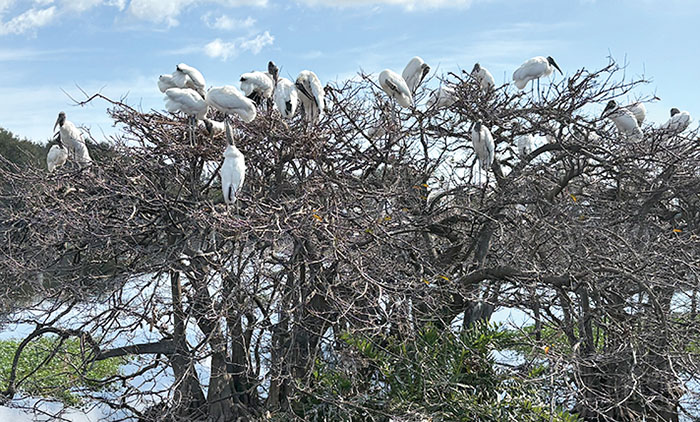
In this Atlantic Coast city, fortunately, that mentality does not govern. This city has taken a 50-acre site designed for wastewater management and developed it into an impressive wetland that disproves the notion that the establishment of artificial wetlands cannot be successful. The site, known as the Wakodahatchee Wetlands, is a thriving community in which alligators, iguanas, cranes, egrets, blue heron and turtles live together with a spectrum of plant life that affords them comfortable lodging and nourishment.
The city has built a wooden walkway, three-quarters of a mile long, which allows visitors an opportunity to come close to nature. Signage along the way calls attention to the different species that inhabit the wetland. Some of the trees and islands are close to the walkway, which lets people approach the birdlife. The birds, for their part, ignore their guests, concentrating on their own habitat.
To date, over 150 species of birds have been seen in this wetland. In the water, several species of large turtles swim by, unaware of their star status for the humans looking at them. The temperature on day of our visit was warm, thus causing the alligators, one of which was eight feet long, to lull quietly, partly on an island and partly in the water.
A great blue heron was feeding her chicks, and an egret couple were building their nest by breaking off dead branches of some of the trees and shrubs. The male and the female were working on the project in unison, unaware of the fascinated bystanders a few yards away.
On a daily basis, the Palm Beach County Water Utilities Department pumps 2,000,000 gallons of treated wastewater into the site. The water is 90% free of contaminants, leaving the wetlands to complete the process. The water flows in a current, keeping it fresh for the flora to grow and fauna to enjoy. With hundreds of birds in the habitat, mosquitoes and other insect pests are not a problem—rather those that do come provide tasty treats for the birdlife.
The wetlands are not for the animals alone. Hundreds of residents and tourists visit the site every day. We arrived at 10 a.m. and had to wait for a parking space. On our visit, not surprisingly, over half of the attendees were senior citizens. A large part of the other half were school-age children, who were enraptured at seeing the wildlife.
I came away from the Wakodahatchee Wetlands renewed in realizing that mankind and nature can co-exist to each other’s benefit in modern times. Delray Beach is a prosperous city on the Atlantic, spanning both sides of the Intracoastal Waterway. With the Everglades National Park, Florida has an abundance of natural habitat, and the Wakodahatchee demonstrates that wetlands can be introduced with success, thereby making life better for flora and fauna, which we as humans can appreciate and understand.