This is a story from Bay Heritage 2026, a full-color supplemental publication included free to subscribers with the September 24th edition.
Click here to read Bay Heritage 2026 in its entirety as a pdf, or through the supplements section in your e-Edition.
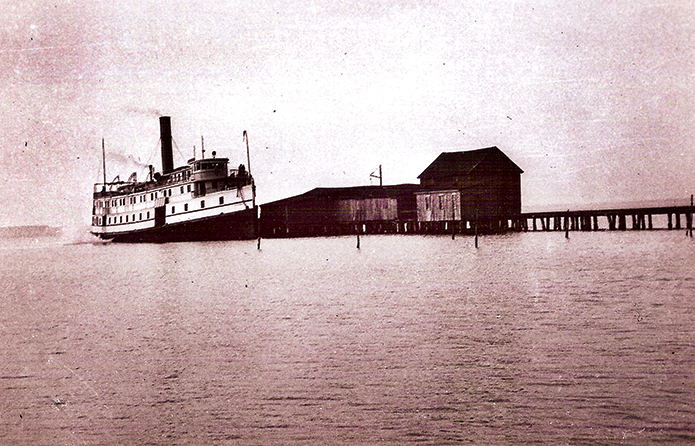
The age of commercial steamboat travel on the Rappahannock River started in 1821 and ended in 1937 when the steamboat Anne Arundel made the last excursion trip up and down the river.
Baltimorean George Weems in 1828 started the first commercial steamboat route on the Rappahannock River. Through the Antebellum period, steamboats became more prevalent on the river. In 1830, the Baltimore and Rappahannock Steam Packet Company started sending the steamboat Rappahannock to the river on a scheduled basis.
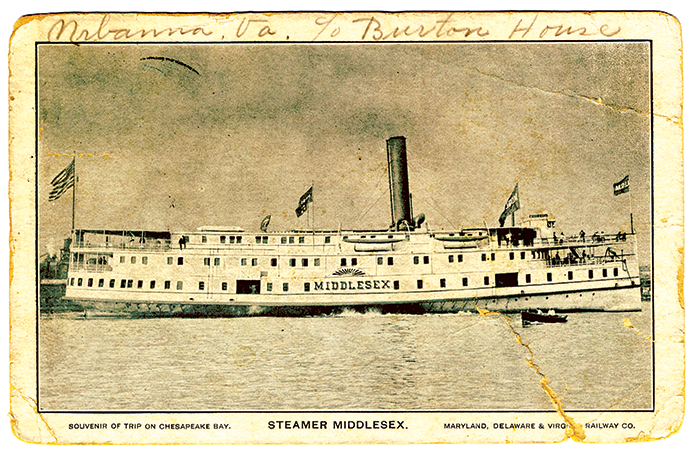
The golden age of steamboats though was in the 1870-1880s when river wharves were built far out into the river. The first wharves used on the Rappahannock were inside of creeks, which made sense — high creek banks gave protection from wind and weather. If weather-bound it was also best to be inside a creek than out on the river or Chesapeake Bay. Low tides, however, often kept boats from entering creeks and hindered turn-around space. These issues often interrupted commerce and schedules.
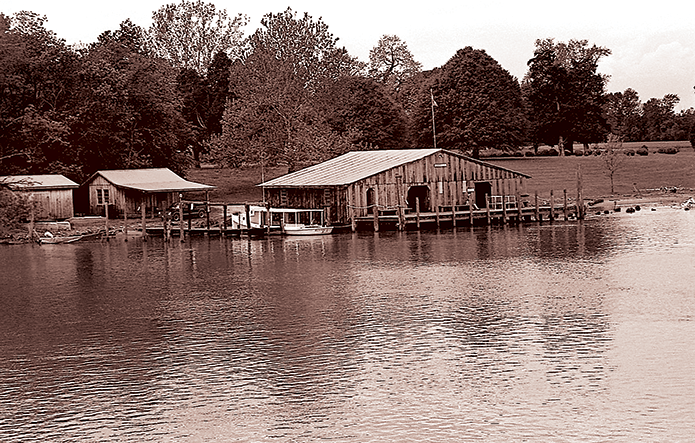
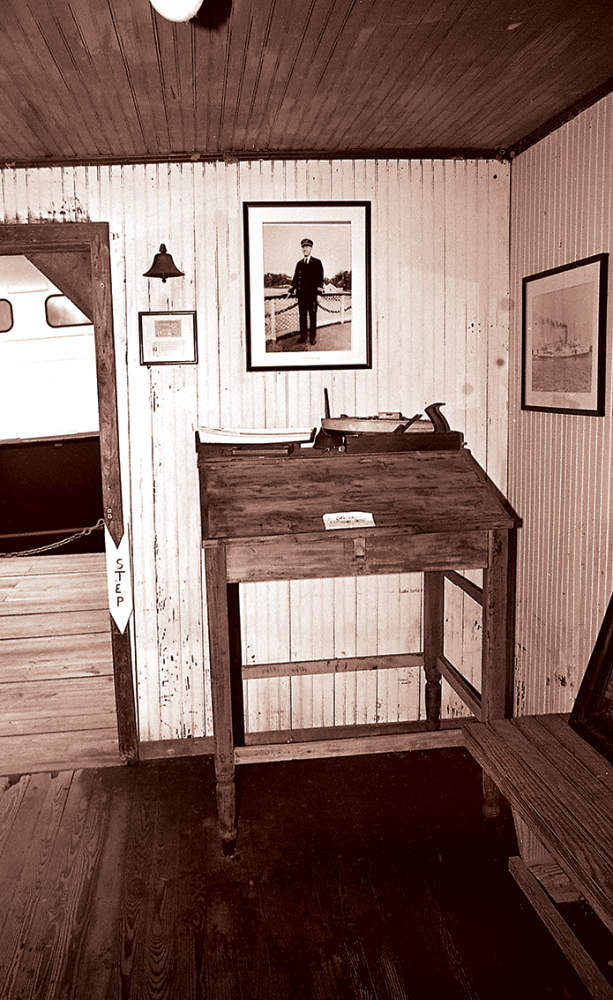
Also, the early steamboat wharves were privately owned. By the 1880s, the business had grown to where the CEOs in Baltimore steamboat businesses were counting pennies. Ownership of wharves enhanced profitability and allowed steamboat companies to control and monopolize the flow of commerce.
When Baltimore steamboat companies decided to shift steamboat activity from creeks to rivers it created new economic centers wherever river docks were located. The long docks on the river were North End Wharf, also known as Grinels Wharf, at Deltaville, Mill Creek Wharf at Wake, Burhan’s Wharf at Locust Hill, West Urbanna Wharf near Urbanna, Water View Wharf in Middlesex, Bayport and Bowlers wharves in Essex County, Morattico (also Whealton’s Wharf) in Lancaster County and Sharps Wharf in Richmond County. There were other wharves against the shoreline scattered up and down the Rappahannock. The only original steamboat wharf still standing is Saunders Wharf in Essex County.
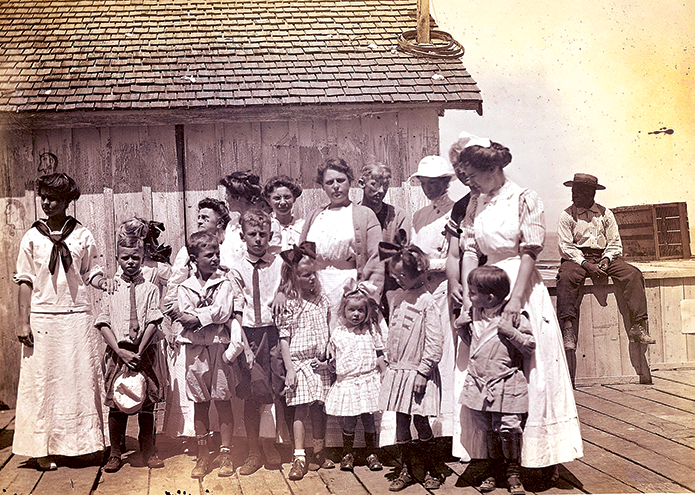
Steamboats brought city-life to county-life and county-life to city-life. Just like roads and interstate highways later on provided travel opportunities, the steamboat was that avenue for past generations.
Tourism
For some communities the steamboat brought a form of tourism. Due to locations of some river steamboat wharves, hotels were established at West Urbanna, Morattico and Bayport wharves.
West Urbanna Wharf was located at the end of Lord Mott Road near Urbanna and got its start when William H. Purkins of Urbanna sold acreage at the mouth of Robinson Creek to the Baltimore and Susquehanna Steam Company in 1871.
A long pier was built out into the Rappahannock River and it became known as West Urbanna Wharf, later renamed Nelson’s Wharf and later known as Remlik Wharf.
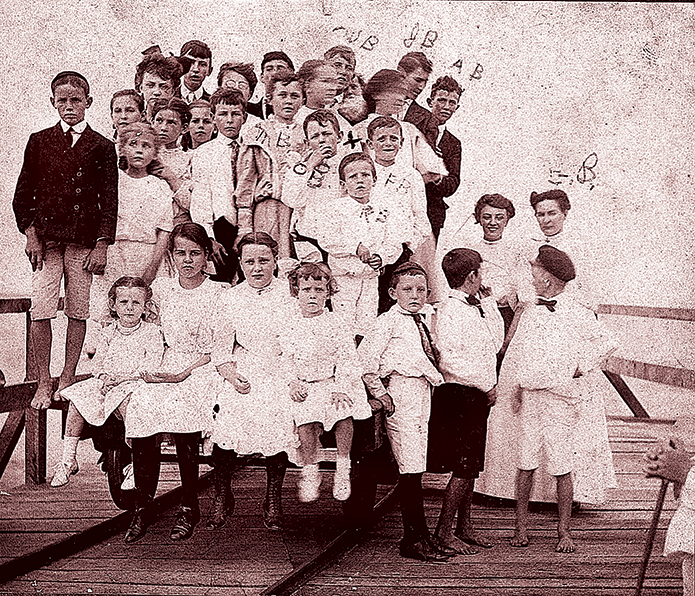
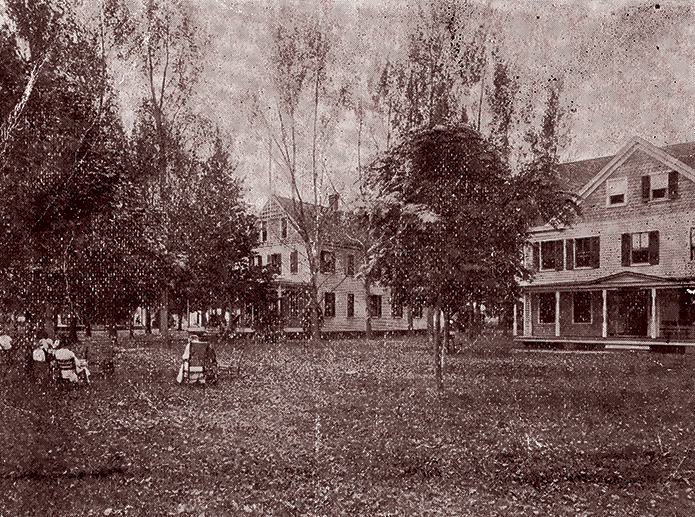
Shortly after the dock was built, Captain D.M. (Lang) Nelson purchased the shoreline river bank near the wharf and established Hotel Nelson. It became a summertime vacation spot for families who came from as far away as Philadelphia and other northern cities via steamboat. They would come and spend a family week relaxing, playing tennis, croquet, sunbathing, dancing, crabbing, fishing and dining.
The Hotel Nelson brochure advertised that “the table is supplied from the Nelson Hotel farm, with plenty of fresh vegetables, chickens and eggs, from the river plenty of fresh fish, and from Baltimore Captain Nelson buys his meat, western meat, not the tough, country variety.”
The hotel also advertised that “the average country resort gets its ice from artificial ponds, with water supplied from questionable sources and may be the open door to serious illness,” it stated.
“The Nelson Hotel gets its drinking water from a well seven hundred and twenty-two feet deep with ice made from artesian well water,” it stated.
“To those desiring a quiet resting place for the summer, where good country food is bountifully served, and thinking more of health than show, here it is.”
“Hotel Nelson is reached by boat from Baltimore or Fredericksburg, via Maryland, Delaware and Virginia Railroad Co’s steamboats,” the brochure stated.
Agriculture
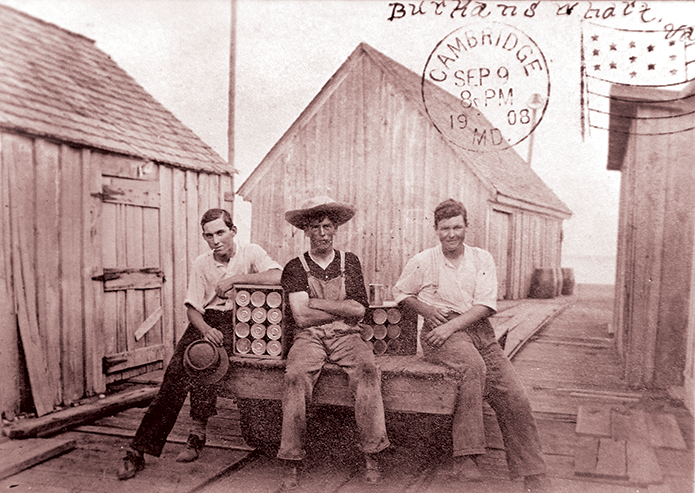
Burhan’s Wharf was located in Locust Hill at the end of what is today Burhan’s Wharf Road. Burhan’s Steamboat Wharf was founded in 1887. John S. Burhans, a native of Westfield, N.J., built Burhans’ Wharf. That same year a post office named Cooper was started in a building on the shore near the wharf. The wharf was constructed near where the old Brandon Plantation (tobacco) pier had been located a century earlier. Many of the first steamboat wharves went back to tobacco and Colonial shipping.
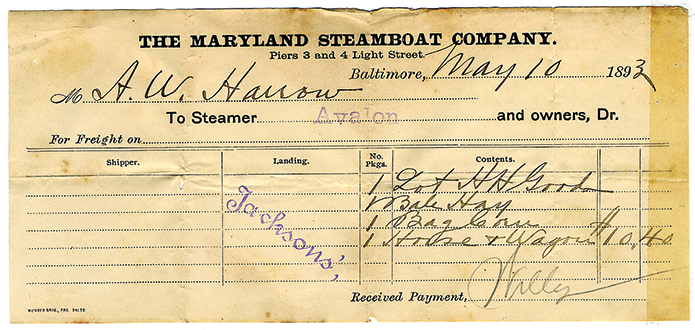
The late Sherman Holmes Sr. grew up near the wharf and in an interview in the 1990s spoke of the way cucumbers from his father’s field were sold and transported via steamboat to Baltimore.
“My father was an oysterman and farmer. A representative for a pickle company would be at the wharf at harvest time for farmers to bring and sell cucumbers. My father had a contract with a buyer in Baltimore to provide so many bags of cucumber per season.
“The cucumbers were counted and graded (different sizes) and we were paid so much for the different sizes,” he said. “I remember this very distinctly. The buyer representative said my father was a very honest man. Whatever count he gave they accepted it. We would bring them down here in large burlap bags.
“We also ordered our fertilizer from Baltimore and it was brought to the dock by steamboat,” he said. “It arrived in 200-lb. bags but later the fertilizer company downsized the bags to 167 lbs. charging the same price for the 200-lb. bags. That did not make my father happy.
“We would come down to the wharf in horse and wagon to pick the fertilizer up. There was a cart on a railroad track that we used to push the bags of fertilizer to shore and we would load it onto the wagon and take it home,” he said.
Homecoming
The late Sherman Holmes Sr.’s family has generationally been members of Calvary Baptist Church at Christchurch. He recalls when North End Wharf was the gateway to Middlesex County and traveling down to meet friends and relatives coming home for the annual summertime revival.
“We always had our revivals in August, and it always began on the third Sunday — that was Homecoming Sunday. It was a time of celebration, picnics, gospel singing, and some fiery preaching. Lord boy, some of the best eating in the world was at those revivals.
“All the people who had moved to the cities to get jobs would come home for some of that good old down-home cookin’ and religion and it was great fun,” he said. “On that Saturday night before revival, lots of people in the church would meet at North End Wharf to see who was coming off the boat going to the revival. There were cars lined up along the sides of the road for miles waiting for the boat.
“You see, that was the first wharf on the Middlesex side of the river where the boat stopped,” he said. “The steamboat got there around 11:30 or 12 o’clock at night. We would all stand at the end of the dock waiting. When they would get off the boat, I can see the people now, screaming and crying, and hugging and kissing for joy. You know, there is nothing like a homecoming.”
The longest wharf
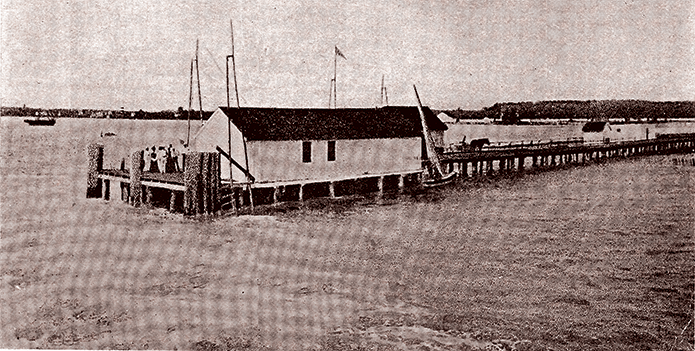
Morattico Wharf, also called Whealton’s Wharf, is considered to have been the longest steamboat pier on the Rappahannock. By the 1920s the steamboat had brought commerce to Morattico. Baltimore’s Lord Mott vegetable processing plant had established two local branches one at Morattico Wharf and another at West Urbanna Wharf.
The community also boasted a doctor’s office, country store, a small cafe, hotel, seafood processing plant next to the wharf and an oyster holding shed located near the end of the wharf. All this was fueled by the steamboat coming and going.
At some point, oyster shells from the wharf were thrown into the water. Today, the only physical reminder of the wharf are shell piles underwater where recreational fishermen troll along the edges for rockfish.
For a dime, young boys would haul passengers’ baggage in small wagons going to and from the hotel.Newlywed couples used the steamboat for honeymoon trips where Morattico Hotel provided a night or two stay. The steamboat was also the fastest form of transportation at the time to reach a hospital.
On Monday morning if a man needed a suit cleaned and pressed, he could put it on a steamboat bound for a cleaners in Baltimore and it would arrive back on Thursday ready for church on Sunday.
The end
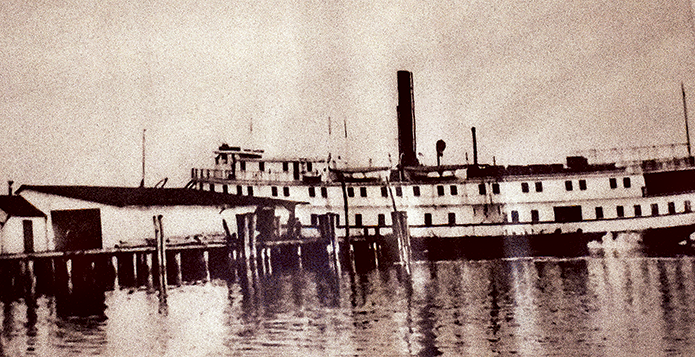
With the introduction of Virginia’s Bryd Road Act of 1932 that turned over the maintenance of secondary highways to the state, resulting in improved inland transportation, the steamboat era stopped and the commerce surrounding villages like Morattico, Sharps, Water View, and Bowlers dried up.
The popularity of automobiles and roads worked to the advantage of other communities such as Kilmarnock, White Stone, Tappahannock and Gloucester, all located on main thoroughfares.
The steamboat and life surrounding the wharves, though, have a special aura about it that makes the Rappahannock steamboat era a special place in time!